

HCA Healthcare is an American for-profit operator of healthcare facilities based in Nashville, Tennessee. As of May 2020, it owns & operates 186 hospitals & approximately 2,000 sites of care, including surgery centers, freestanding emergency rooms, urgent care centers, and physician clinics in 21 states & the United Kingdom. HCA Healthcare was looking to rethink its patient experience & how HCA leveraged patient-facing technology to improve various hospital interactions.
Any reason can cause an Emergency Department(ED) visit. Why, how long, and what kind of pain, discomfort, and state of mind you are in when you leave are just a few factors that hospitals can't control. Upon release from the ED, patients receive their release paperwork with aftercare instructions, prescribed medications, referred specialist if needed, and more. How can the ED aftercare experience be improved?
HCA Healthcare's Internet Technologies Group hired me to be a part of a brand new team called Digital Proofs. Digital Proofs was a newly formed team created to enhance the patient-facing experience and better utilize HCA Healthcare's digital tools and products. Our group consisted of myself as a Senior UX Designer, another Senior Product Designer, a Senior UX Researcher, and a Project Manager.
Throughout my first week there, I was quickly brought up to speed on our first "Digital Proof" goal. The objectives were vague, but we had enough information to move in the right direction.
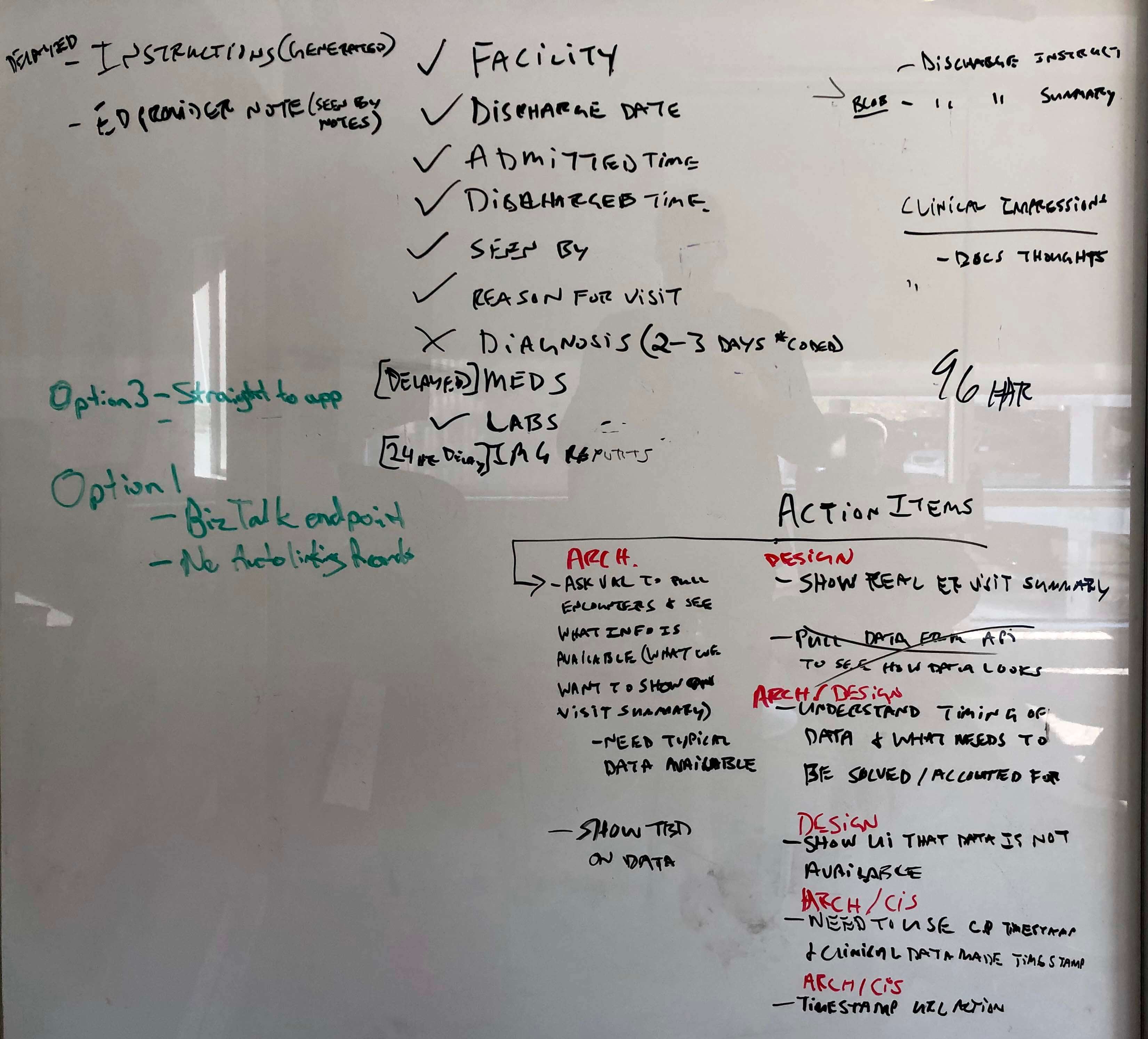
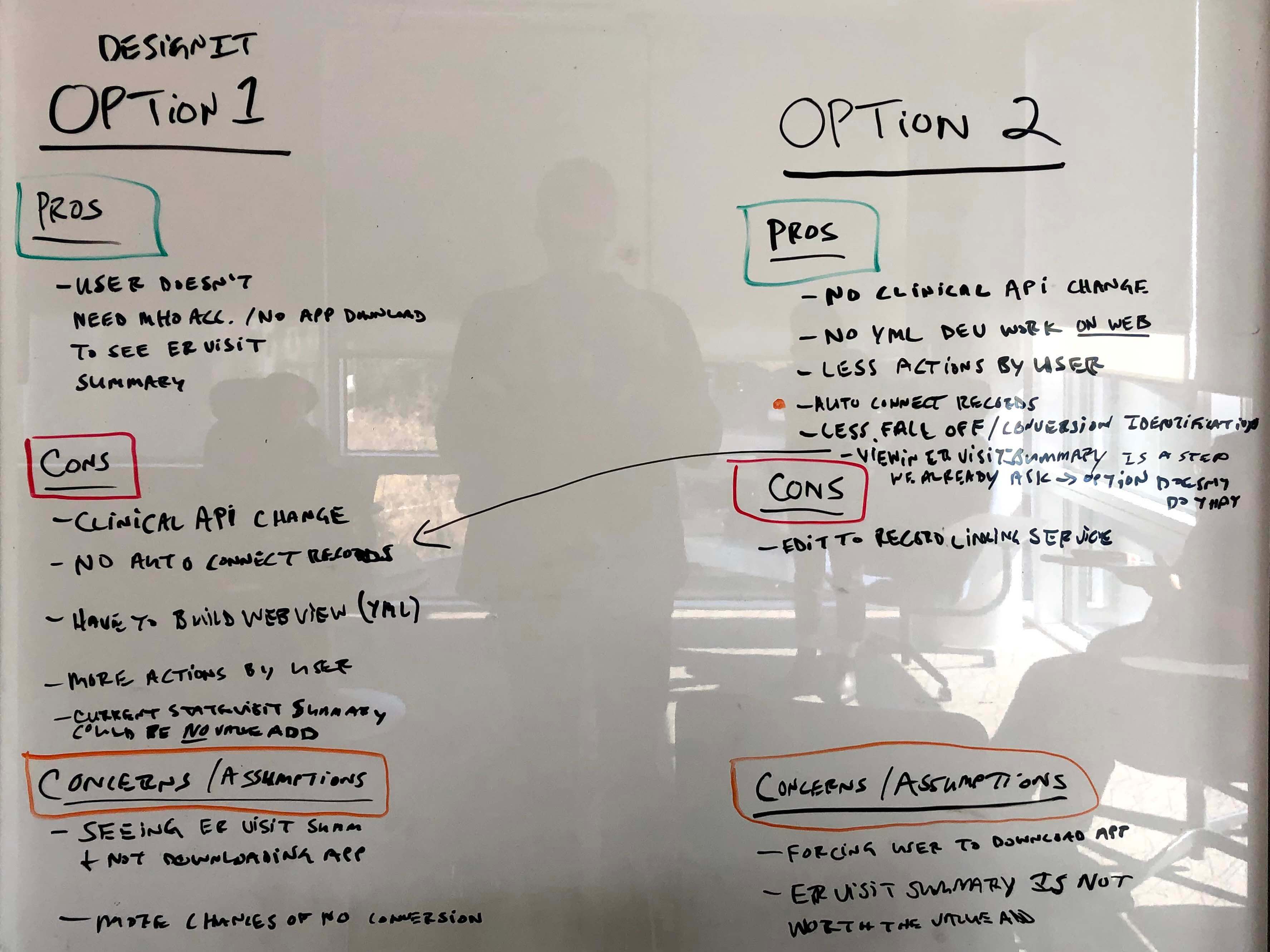
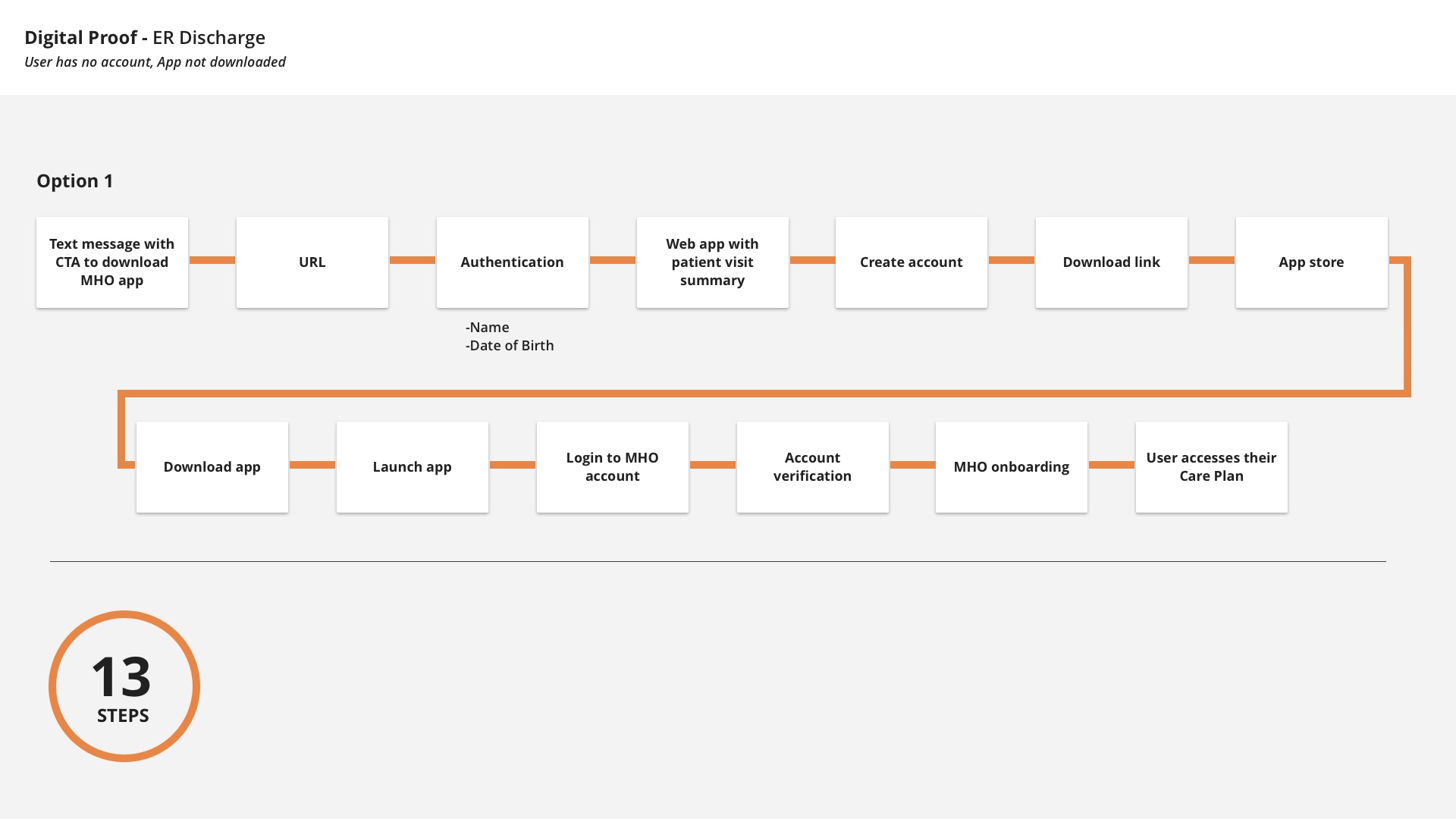
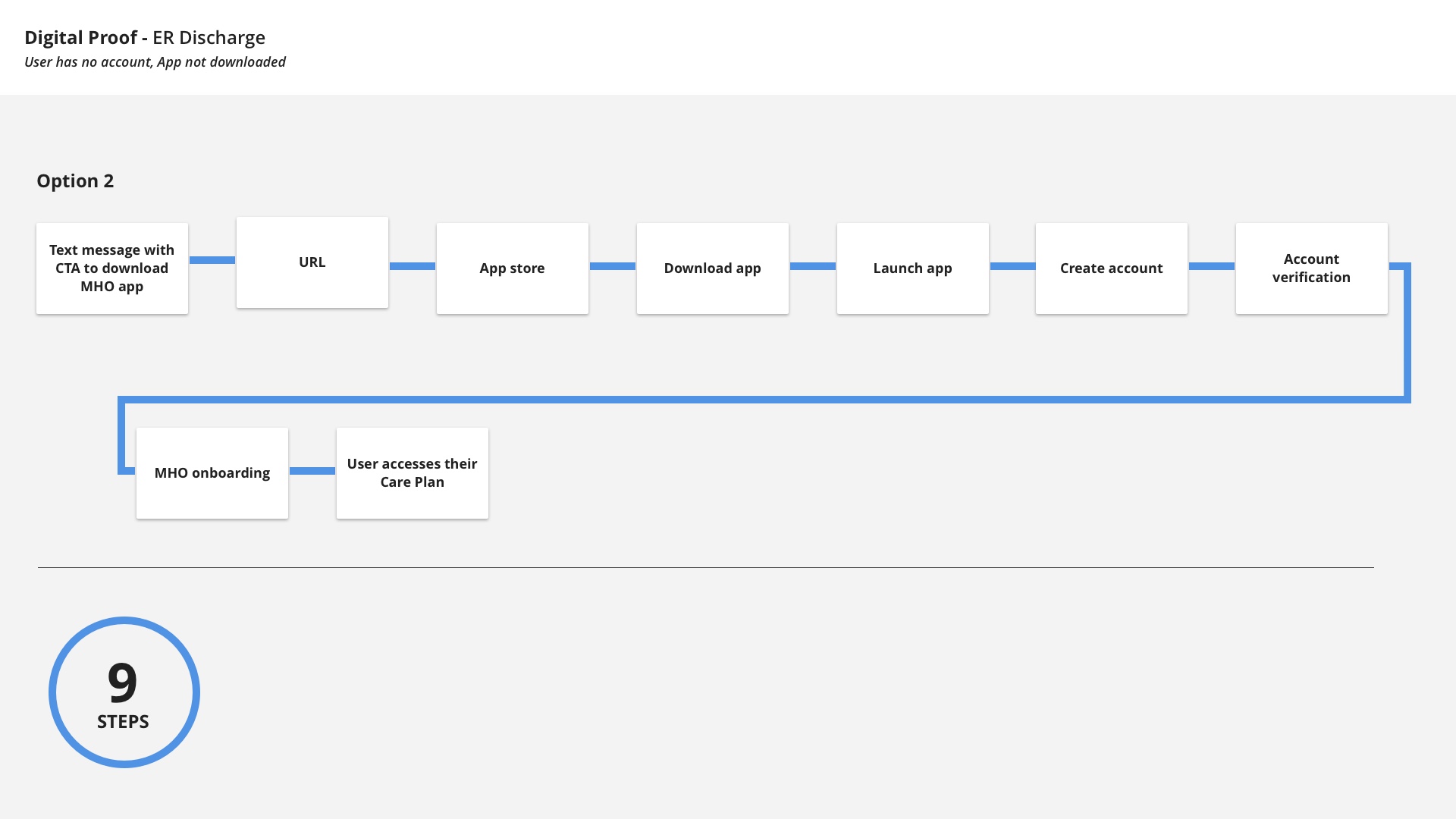
We started mapping how to drive users to the MyHealthONE app and exploring our user personas—learning who was doing what and when and diving into follow-up behaviors from the data collected.

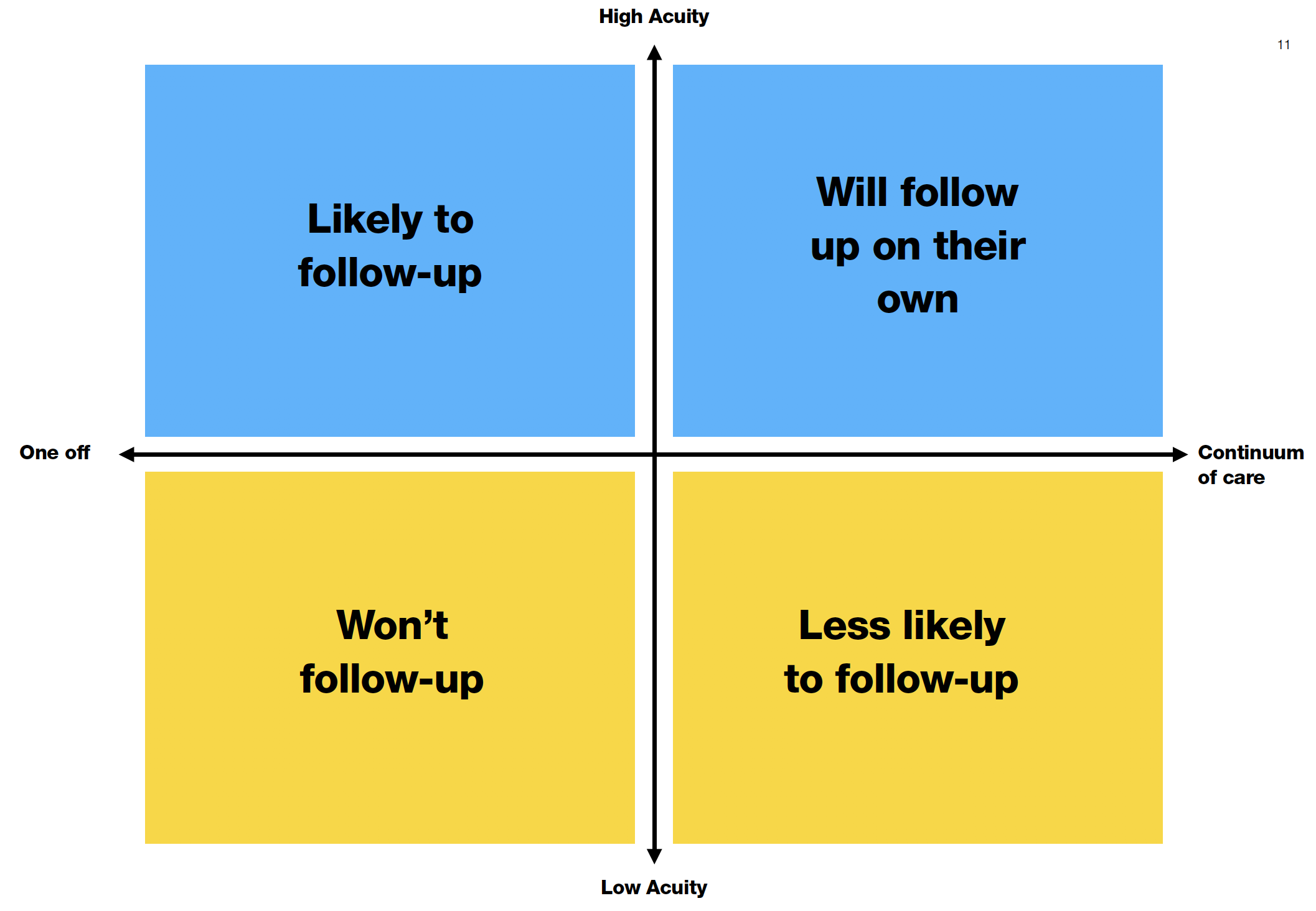
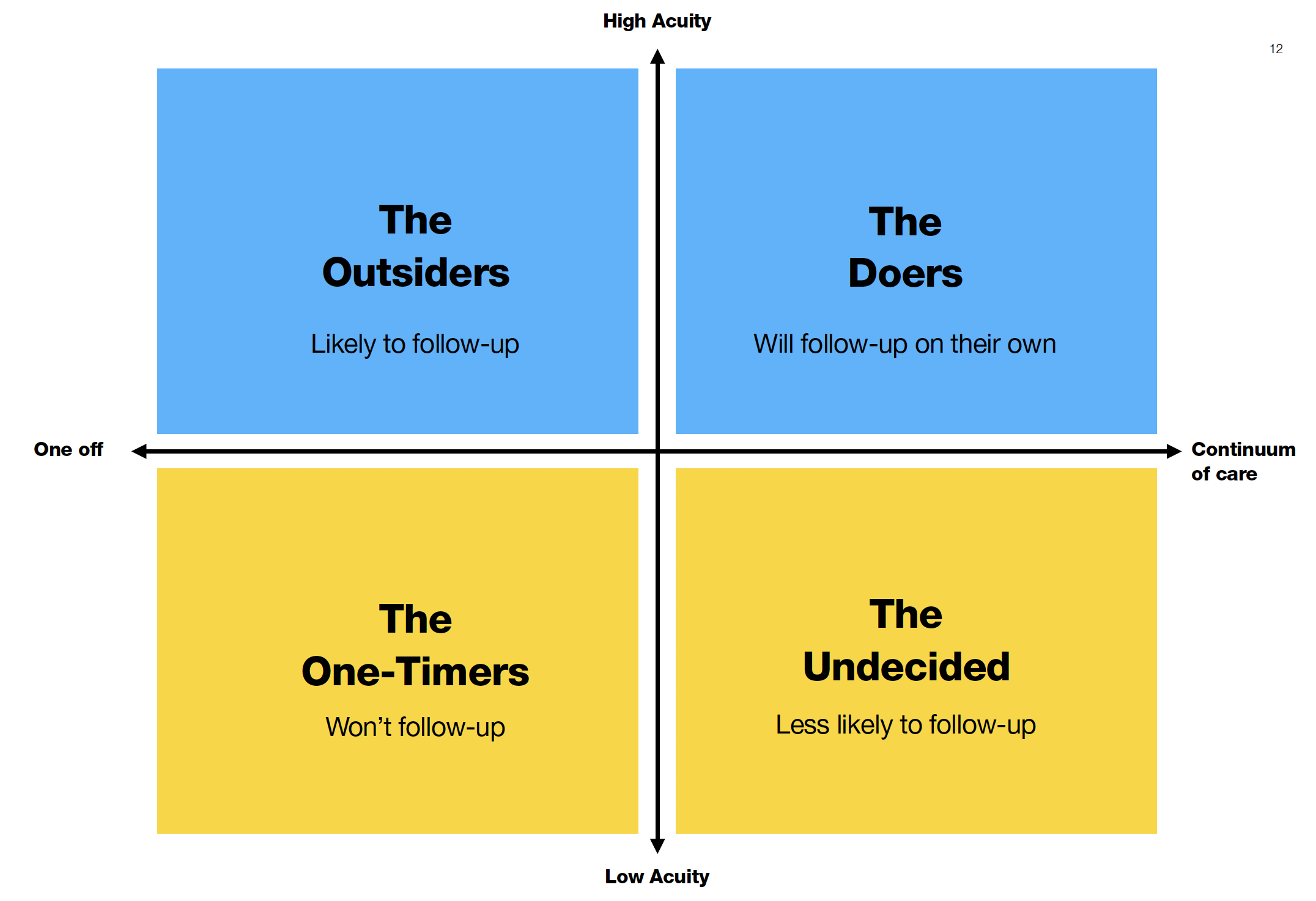
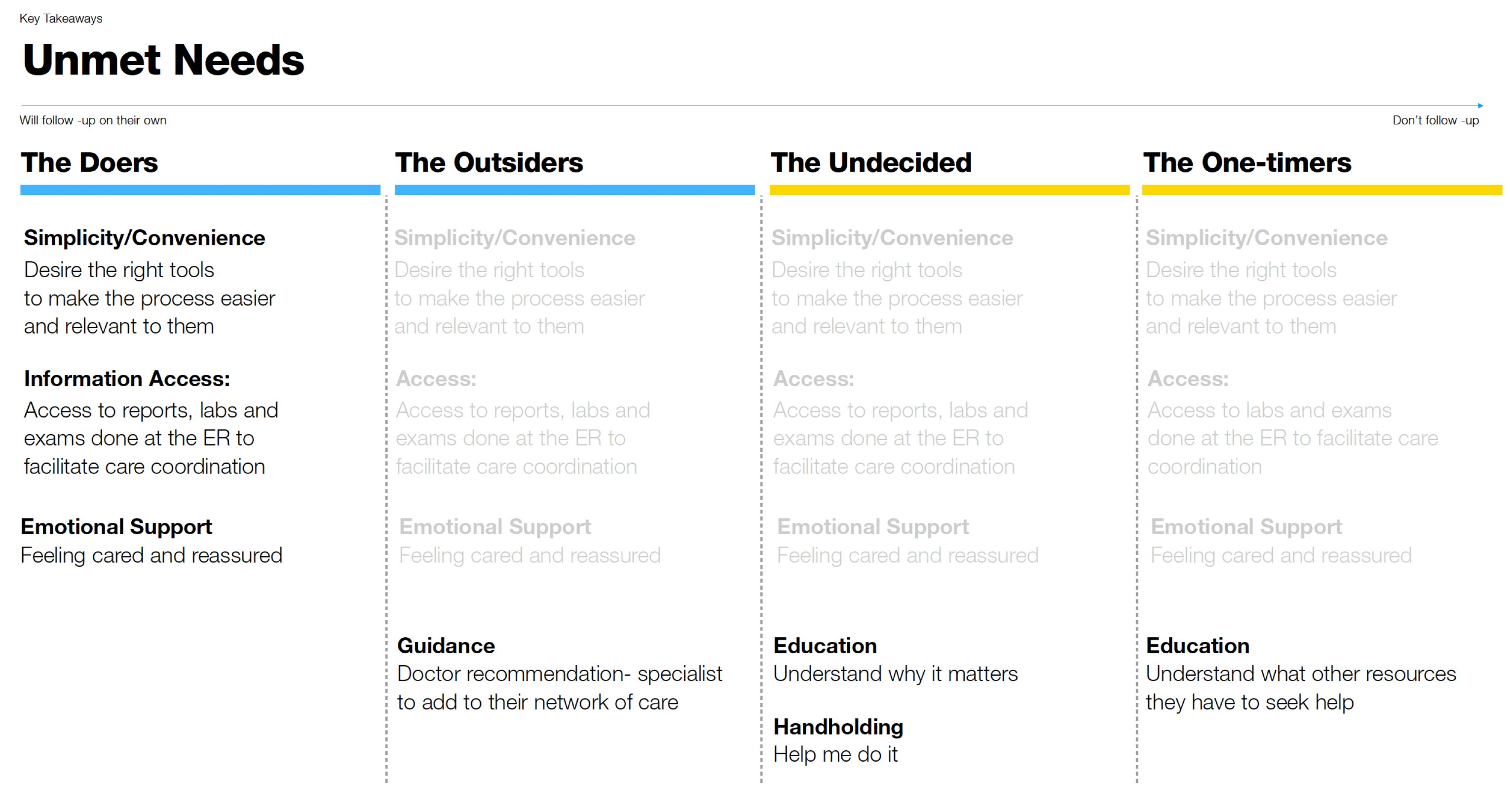
Through conversations with stakeholders, patients, and product owners, we gained clarity to define our objectives.
• Increase engagement among digital consumers.
• Confirm the hypothesis that the three identified patient segments (i.e., Tech-Savvy Newcomers, Engaged Families, Financially Focused Suburbanites) prefer to be engaged via mobile app based on design work by DesignIt.
Specifically, intend to learn the following:
a. How patients prefer to engage post-discharge from the ER (texting/call center vs. mobile application)
b. When patients prefer to engage post-discharge from the ER (timing)
c. Care Plan degree of value for patients’ post-discharge care experience
i. Utilization of medication, recommendations, visit summary
• Increase number of Appointments booked post-discharge.
• Increase the number of patients with MHO Accounts.
• Increase the number of MHO accounts with linked medical records.
Now that our objectives were clearly defined and approved by the product team, development teams, and stakeholders, we went through multiple quick iterations of the product. We test various hypotheses and questions with every iteration to understand the features, function value adds, and usability.
Below are just two small examples of test runs.
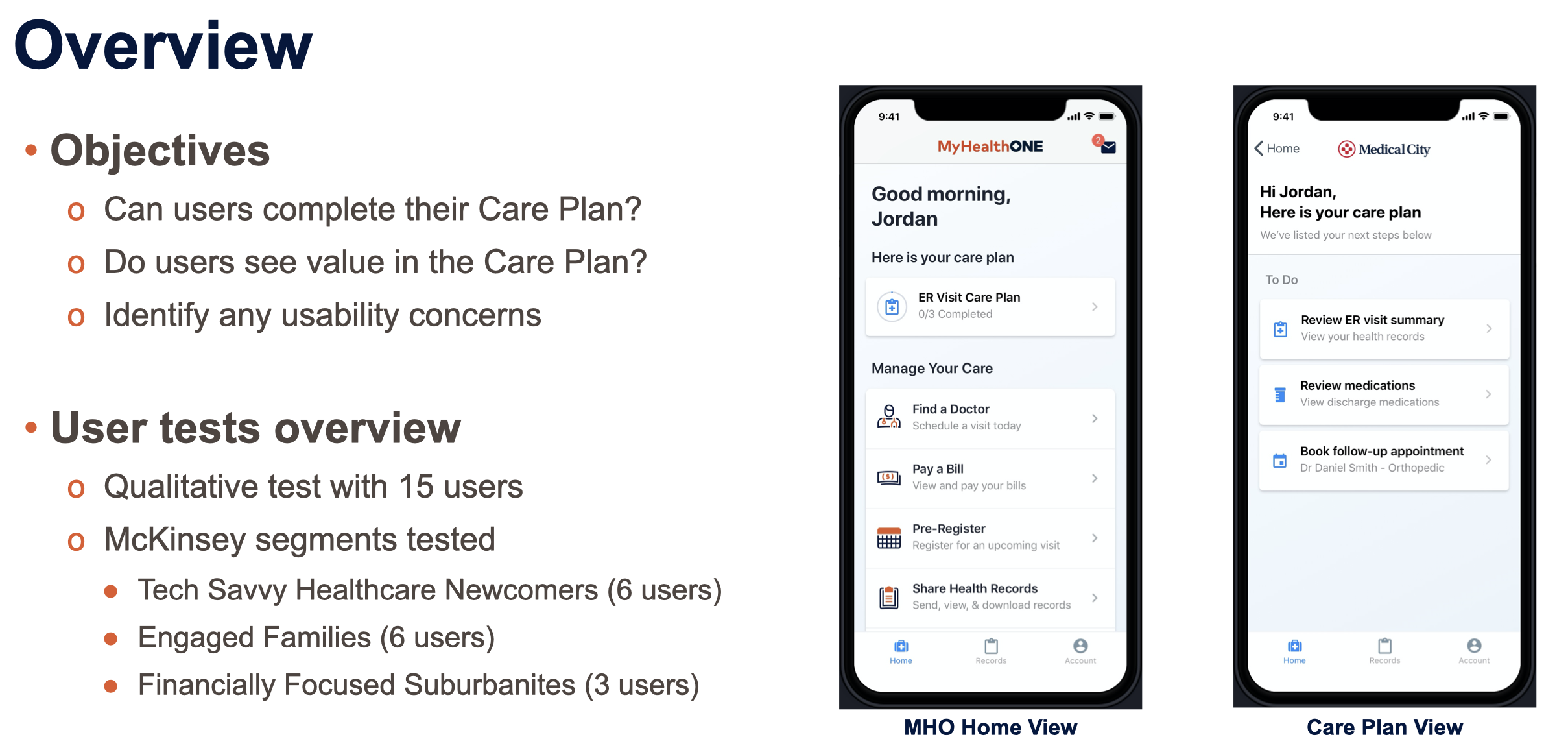



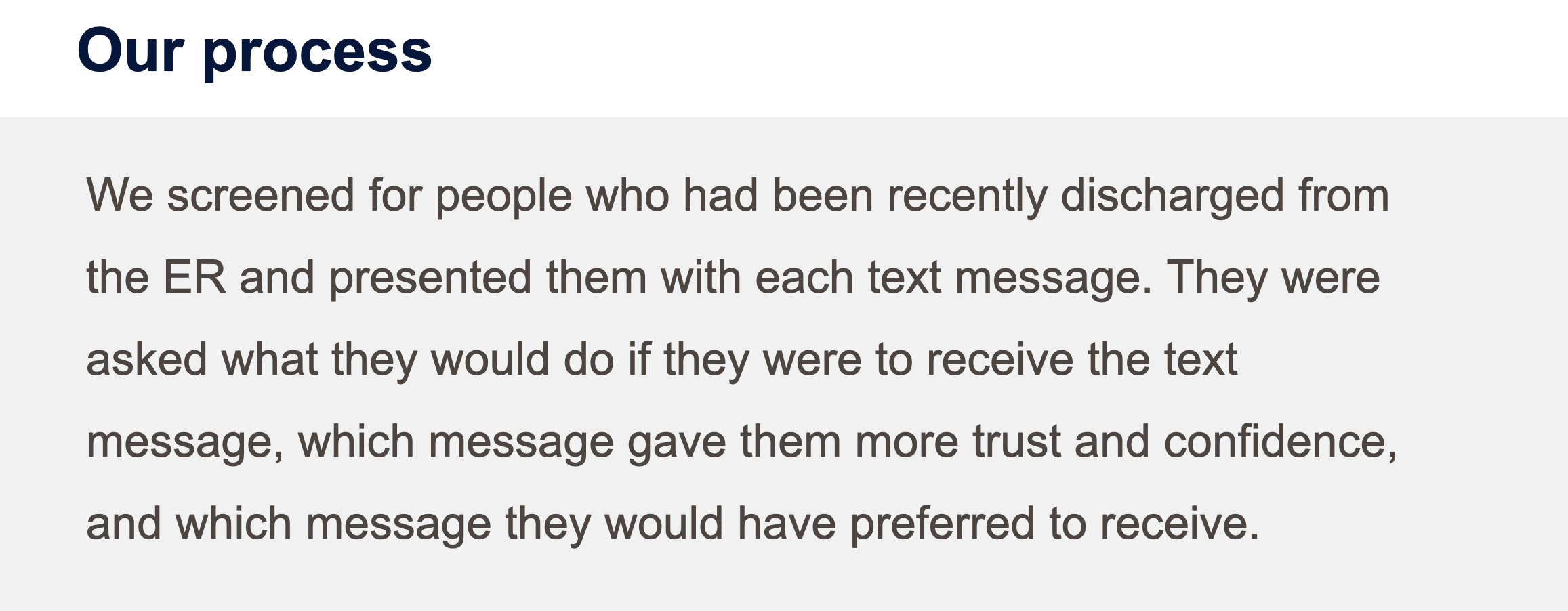


The culmination of our conversations, user tests, design iterations, animations, prototyping, and stakeholder feedback, we launched a pilot across six facilities in our Texas region.
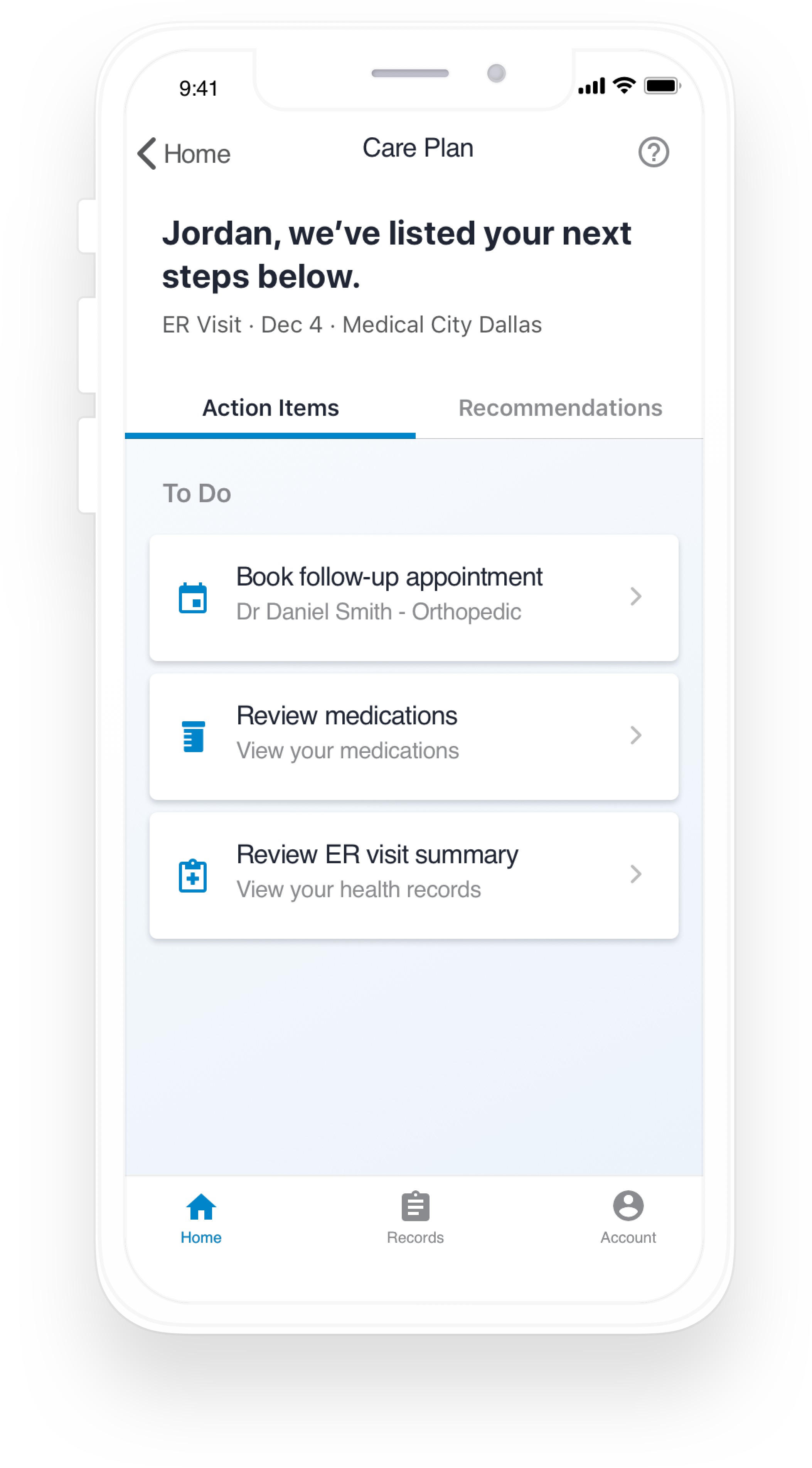
Below is a timeline for patient interaction after discharge from the ED and a video of the Care Plan in action.
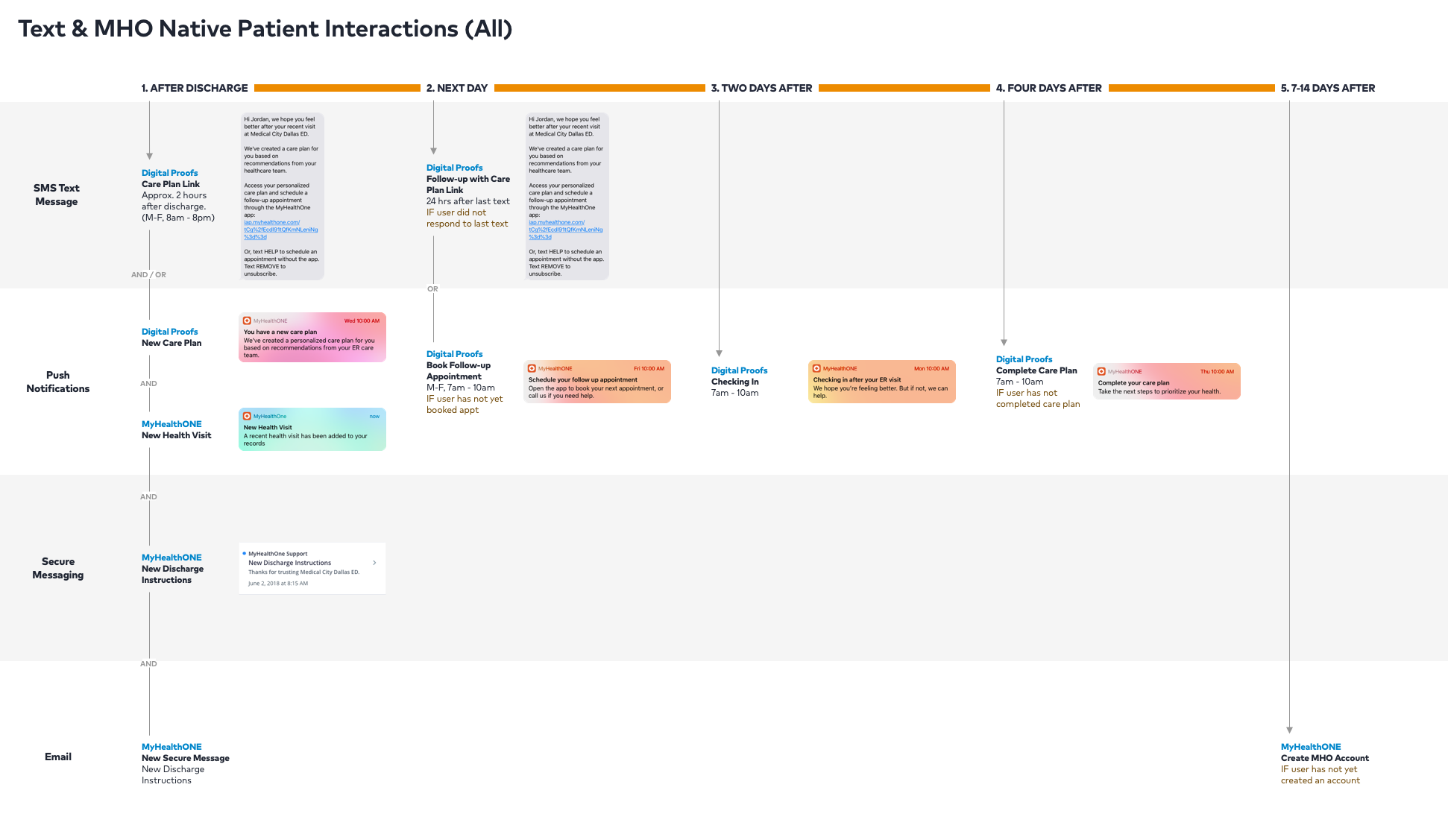
In conclusion, this was very successful proof. By using a simple checklist containing the essential task following an Emergency Department visit and a thoughtfully tested interaction timeline, we elevated the patient aftercare experience.
